

Mirrors and large frames
Give the dimensions and explain the surface and frame. Ask about suitable protective packaging and the route through both homes.
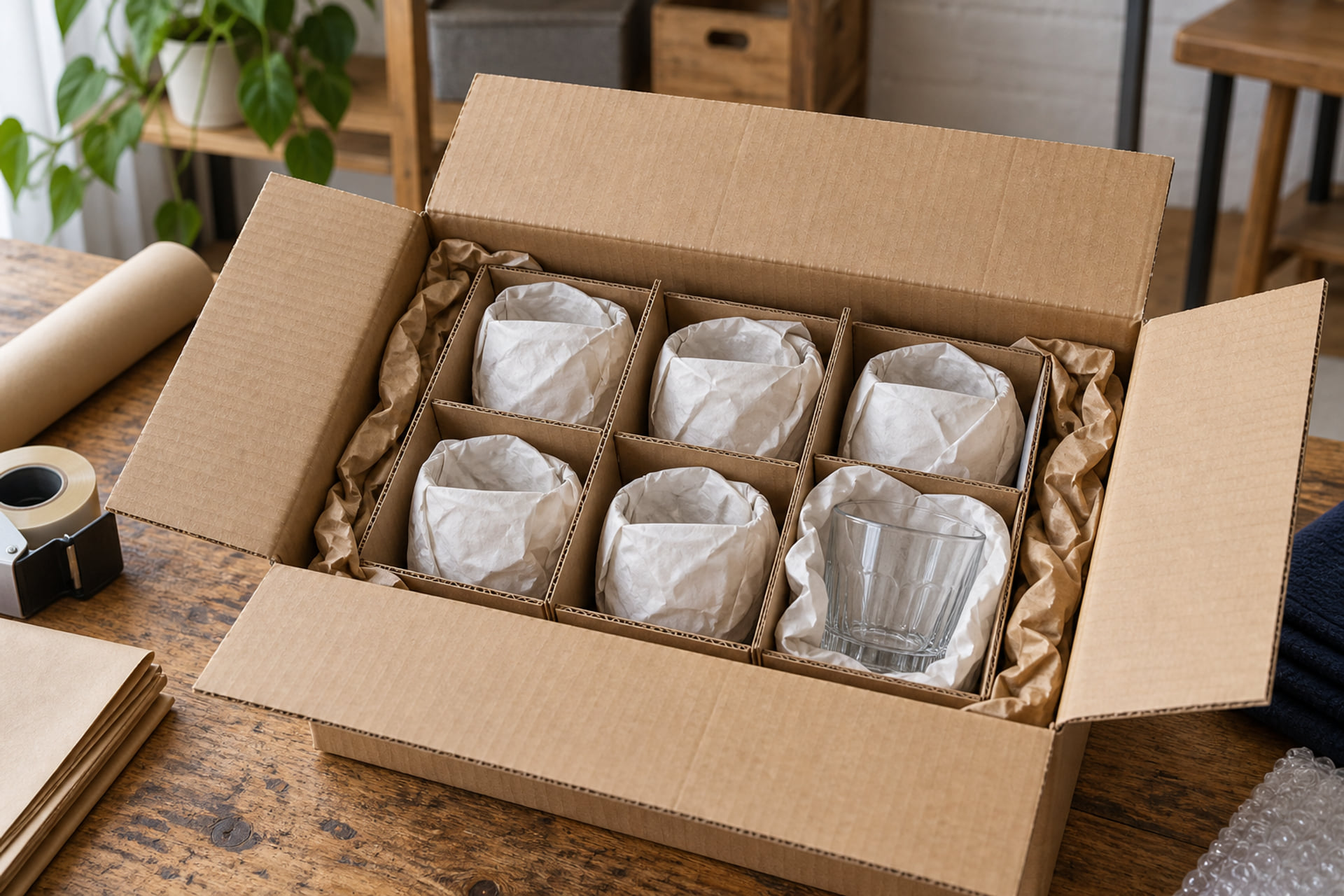
A fragile label cannot stop two loose glasses from knocking together. Protect each piece, separate it from other contents and use packaging that supports its shape. Ask Milvus about professional packing for items that need a different approach.
| Item | Preparation focus |
|---|---|
| Cups, glasses and ceramics | Individual cushioning, suitable dividers and support around handles or stems. |
| Plates and serving pieces | Appropriate wrapping and a carton that supports the pieces without excessive weight. |
| Mirrors and framed artwork | Protection for the face, edges and corners, with packaging sized to the item. |
| Lamps and decorative objects | Separate components where suitable; protect delicate shades, fittings and projections. |
| Glass furniture or antiques | An item-specific plan for removable parts, structure, surface finish and access. |
For unusually valuable, heavy or delicate pieces, discuss preparation with Milvus before packing. A generic household carton may not suit the item.
Choose a stable surface with room for the item, cushioning and carton. Keep liquids and unrelated objects away from the work. Check the item’s condition and photograph relevant details if that helps your inventory.
Have the appropriate materials ready before you start: suitable cartons, cushioning, separators and packing tape. Follow item-specific instructions where available. Do not apply adhesive directly to a delicate finish or assume that one wrapping material is safe against every surface.
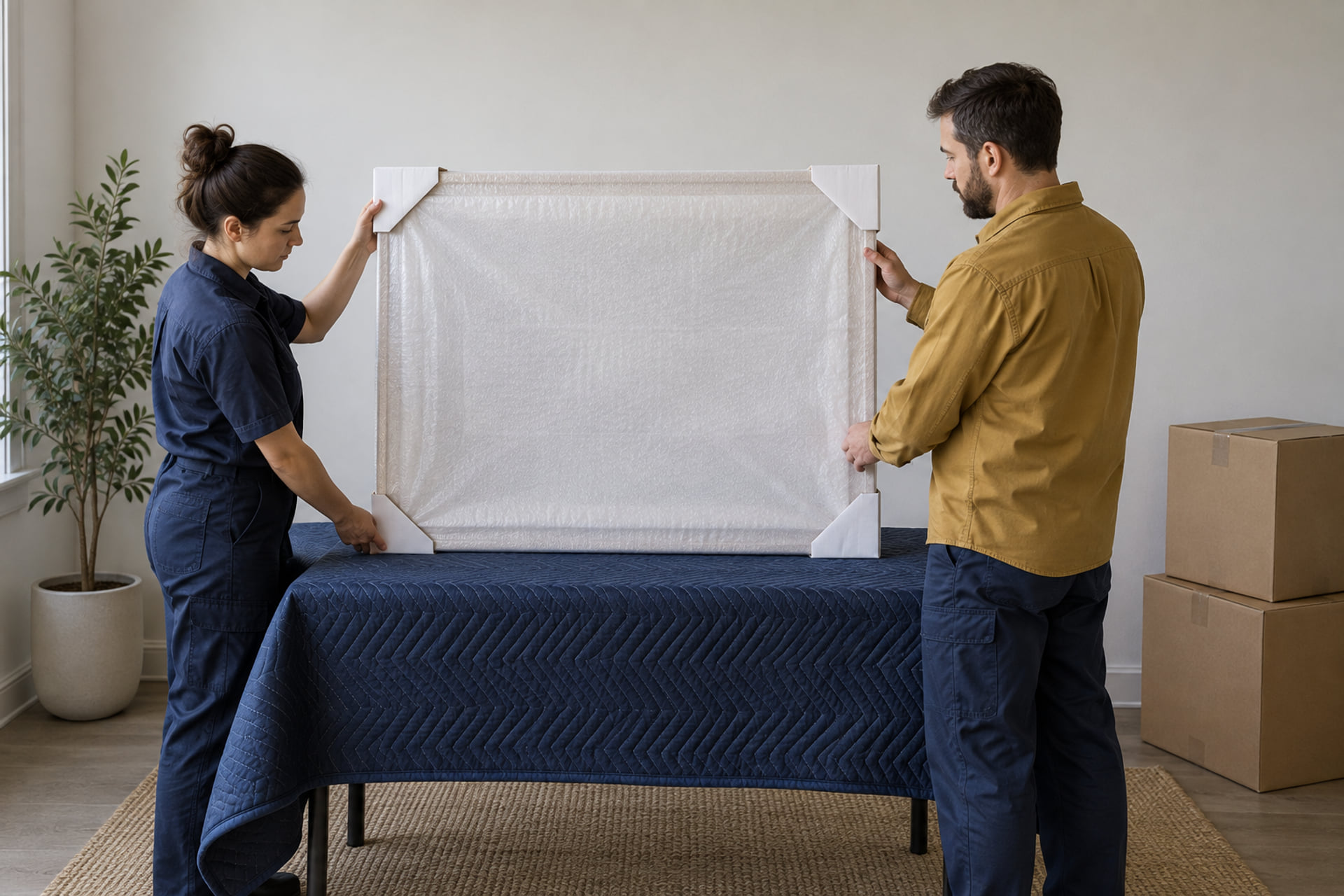
Wrap the piece appropriately and protect vulnerable parts. Avoid leaving handles, stems or protruding details under pressure from other contents.
Use suitable cushioning or dividers to prevent fragile pieces from contacting one another. Keep unsupported heavy objects away from delicate layers.
Fill remaining space appropriately so the contents do not shift freely. The carton should close flat without being forced or bulging.
Give the dimensions and explain the surface and frame. Ask about suitable protective packaging and the route through both homes.
Mention loose joints, repairs, old finishes or removable components. The handling plan should reflect the actual condition, not only the item’s name.
Identify detachable parts and how they are supported. Discuss disassembly and packing responsibilities before attempting to remove a heavy or fragile component.
Follow the packaging instructions and check seams, corners and the base. Repack a weakened or unsuitable carton.
Use a useful room name and description. Make relevant orientation or fragile-item information easy to identify without exposing sensitive valuables.
Point out cartons or pieces that need particular attention. Explain what you packed yourself and what remains for the agreed packing service.
Group ready cartons where they do not block the stairs or exit. Do not balance fragile boxes on furniture that is still being moved.
Packing reduces avoidable contact and movement, but it does not make a shipment risk-free. Ask about the applicable protection or valuation options and any requirements for declaring high-value belongings. Keep the written terms with your moving documents.
For interstate moves, FMCSA explains the difference between Full Value Protection and Released Value and notes that packing your own cartons can make a damage claim harder to establish. Review the guidance and the options in your actual agreement.
Check the inventory and raise visible condition or missing-item concerns promptly. Follow the agreement’s reporting process.
Clear a stable surface, remove cushioning gradually and check it for small parts before discarding it.
If there is a concern, retain the details, photographs, paperwork and packaging needed to explain it. Contact Milvus through the agreed process.
Have a different situation? Call 857-895-8955 and talk it through with Milvus.
No single material fits every object. Consider the surface, shape, weight, internal support and carton, and ask about specialty preparation for delicate or valuable items.
No. The label communicates handling needs; it does not stop pieces from contacting each other or moving inside the carton. Pack and cushion the contents properly.
Discuss the specific items, condition and materials with Milvus first. Some pieces need an item-specific approach, and the agreement’s protection terms should be understood before packing.
Describe the pieces when requesting a quote. Milvus can review the selected packing work, materials and scheduling needed.
Your estimate depends on the items, access and services you need.
Prefer to talk? 857-895-8955Share the addresses, date and the items you want to move. Milvus can help you work out packing, transport and delivery.