

Milvus Moving · Moving guides
Moving with children
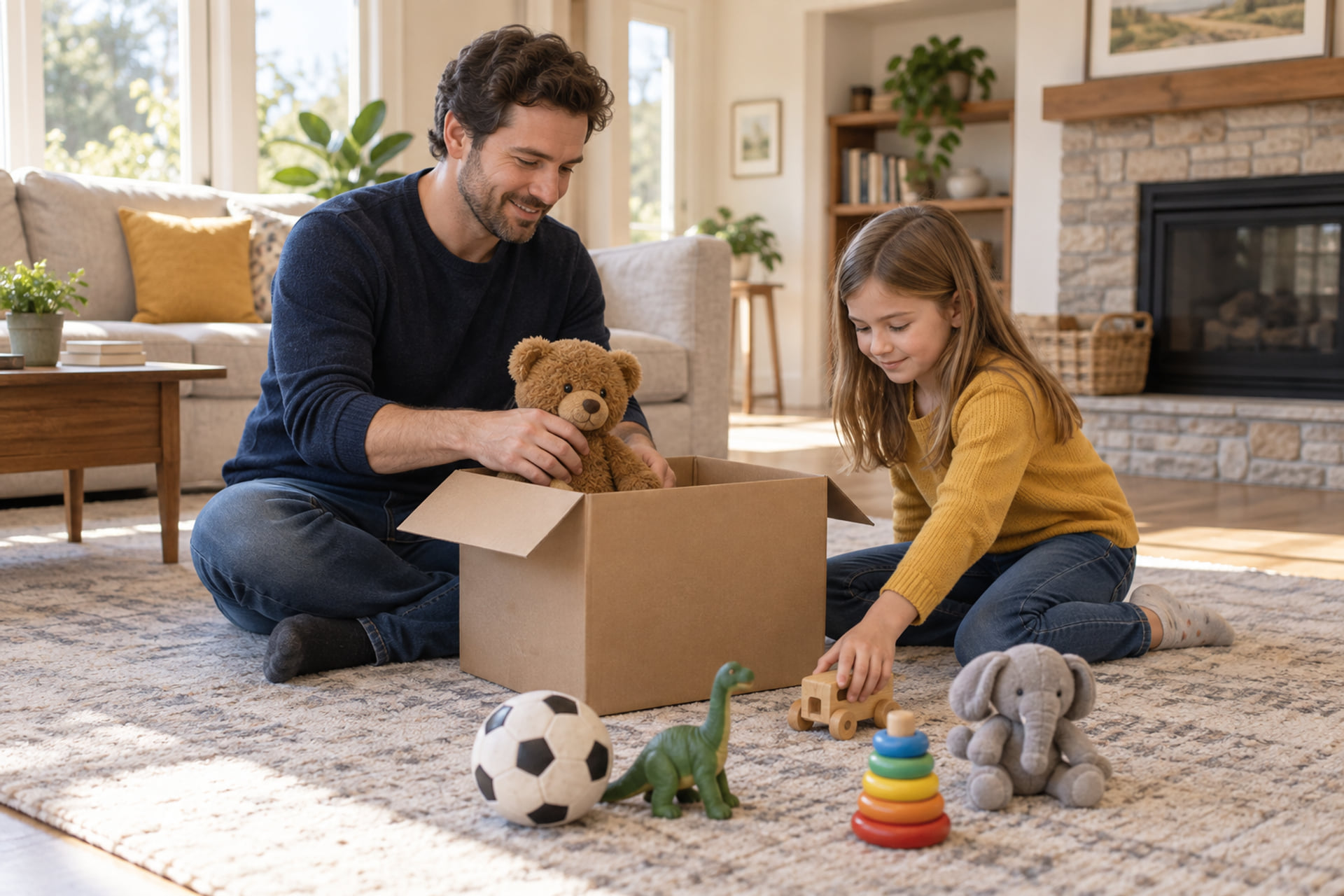
While the furniture is being loaded, children still need meals, supervision and somewhere to rest. Plan their day alongside the move: explain what will happen, keep familiar essentials close and agree which adult is looking after them.
- Before the move
- The day itself
- The first night
Keep the children’s essentials with youPack the things needed for sleep, food, comfort and the trip separately from the household shipment.
Before the boxes take over
Tell children what will happen and answer their questions
Tell children where the family is going, what will happen on moving day and which parts of the plan are still undecided. Use simple, age-appropriate answers. A younger child may need to know where a favorite toy will be; an older child may focus on friends, school or privacy.
Offer choices that are real: which books travel in a personal bag, how to label a bedroom box or where to put a familiar item in the new room. Avoid promising that everything will immediately feel better in the new home. Leave room for questions and mixed feelings.
Adapt the preparation
Different ages need different kinds of involvement
| Stage | Practical preparation |
|---|---|
| Babies and toddlers | Keep feeding, changing and sleep supplies accessible. Arrange a caregiver and a place away from the active loading route. Follow current safe-sleep guidance and the child’s care plan. |
| Preschool and early school years | Show photos of the new home if available. Let the child choose a small bag of familiar toys and books, while an adult handles packing and moving decisions. |
| Older children | Discuss the school transition and ways to keep in touch with friends. Give manageable tasks such as labeling personal boxes or planning the room layout. |
| Teenagers | Include them in practical discussions about their routine, study space and travel. Be clear about decisions already made and areas where they can genuinely choose. |
Pack before moving day
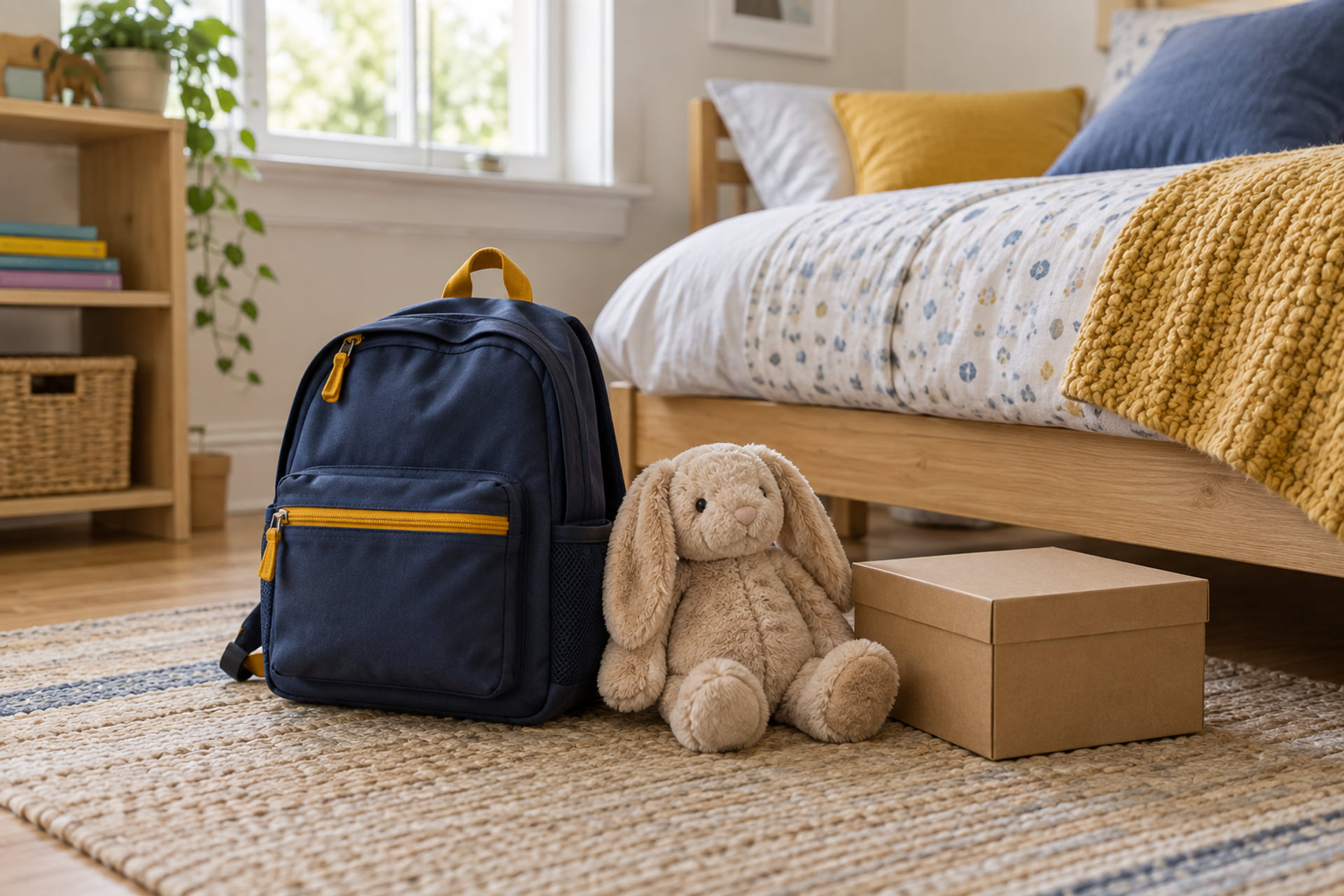
The bag that stays out of the truck
For the journey
Pack water and appropriate snacks, clothing, hygiene supplies and activities suitable for the child. Keep required medication and care information with the responsible adult.
For bedtime
Keep the familiar items your child uses for the evening routine accessible. Bring what you need for a suitable sleeping arrangement rather than relying on finding one particular carton after delivery.
For school or childcare
Carry enrollment documents, contact information and anything needed for an upcoming school day. Confirm the new provider’s requirements before the move.
During loading and unloading
Give one adult responsibility for the children
Choose a place away from the carry route
Arrange care elsewhere if that works for your household, or designate a supervised area that the crew does not need to use. Discuss the plan before loading starts.
Keep tools and packaging out of reach
Adults should manage cutters, tape dispensers, loose straps and packing materials. Children should not play in the truck, on a ramp or among stacked cartons.
Stay available for both plans
The person supervising children and the person directing the move may be different adults. Make sure the crew can reach the household decision-maker without leaving children unattended.
Protect the essentials bag
Tell the crew which belongings are travelling with the family. Keep the bag physically separate so it does not join the shipment by mistake.
At the new home
Make a small part of the home usable first
Check the rooms before children explore
An adult should check access, windows, loose packaging and immediate household hazards. Arrange furniture and any required anchoring according to the manufacturer’s instructions.
Set up the essentials
Prepare the sleeping arrangement, bathroom supplies and a simple place to eat. The whole home does not have to be unpacked for the first evening to work.
Keep a familiar part of the routine
A book, a meal or a regular check-in with someone they know can give the day a recognizable ending. Allow time to settle rather than filling every hour with activities.
After the move
Check in after the practical rush has passed
Check in with children after the practical rush has passed. Keep teachers or childcare providers informed about the move and anything relevant to the child’s routine. If changes in mood, sleep or behavior concern you, discuss them with the child’s pediatrician or another qualified professional.
For the household logistics, give Milvus the furniture inventory, children’s room items and the access at both homes. Discuss packing help and the delivery arrangement early, especially if your family will need essential belongings before the full shipment arrives.
Questions before you book
A few more details
Have a different situation? Call 857-895-8955 and talk it through with Milvus.
Should children help pack?
They can take part in age-appropriate tasks, such as choosing books for a personal bag or labeling a box with an adult. Adults should handle heavy items, cutting tools and the moving route.
What should I tell the movers about the children’s rooms?
List the furniture and any agreed disassembly, and explain which items are staying with the family. Ask about placement at the new home so the essential rooms can be set up in a sensible order.
How long will it take a child to adjust?
There is no single timetable. Keep communication open and seek professional guidance if you are concerned about the child’s wellbeing. A moving plan can organize the practical work, but it cannot promise a particular emotional outcome.
Your moving quote
Tell us where you’re moving
- 1Route & date
- 2Move size
- 3Contact details
Your estimate depends on the items, access and services you need.
Prefer to talk? 857-895-8955Talk to Milvus
Put your moving plan into motion
Share the addresses, date and the items you want to move. Milvus can help you work out packing, transport and delivery.