

The everyday journey
Walk to the stop, ride the route and time the final walk to work or school. Try the journey when you would actually use it. Include a late finish or weekend trip if that is part of your schedule.
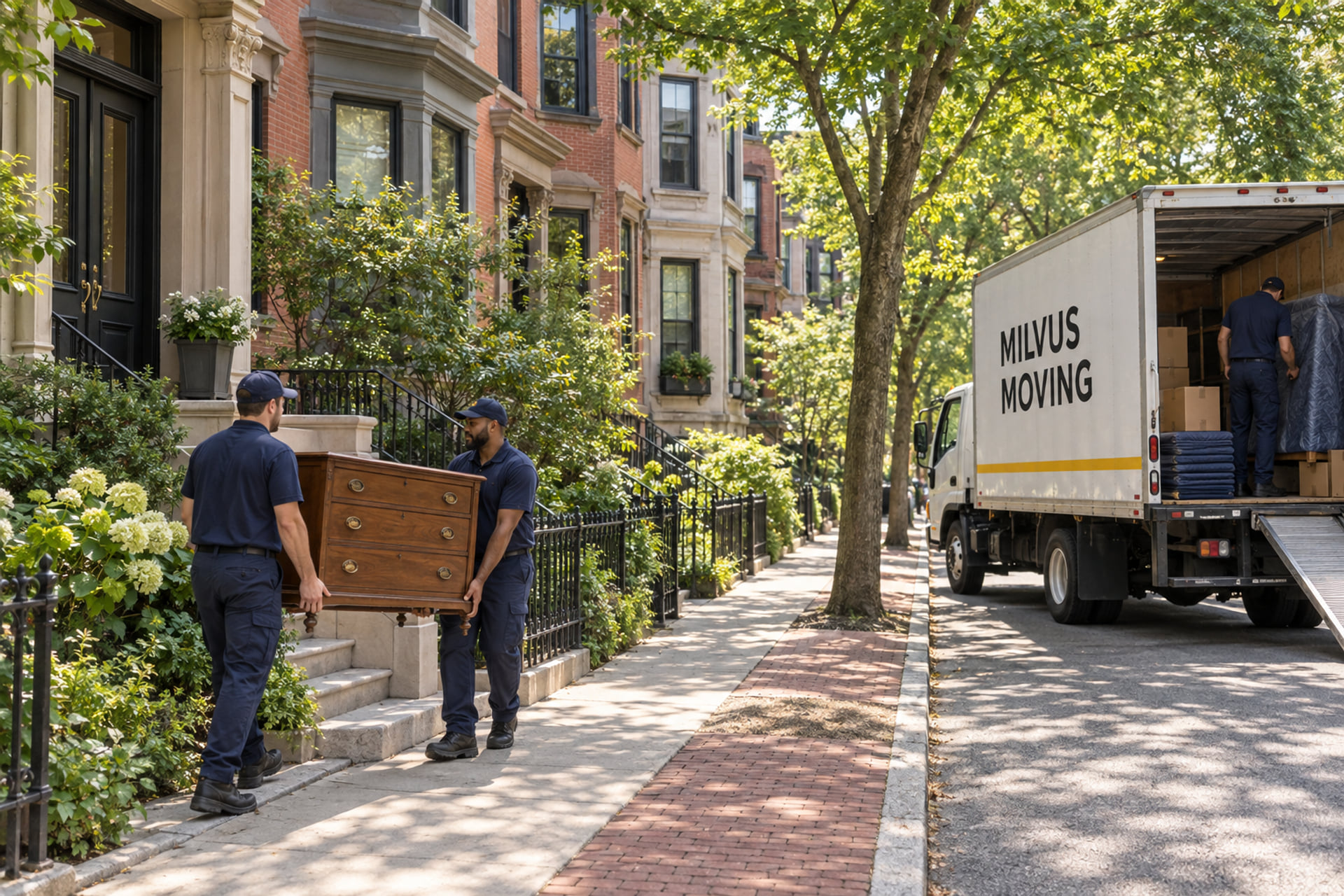
Back Bay, Jamaica Plain and East Boston offer different starting points for a home search. Compare eight Boston areas by everyday travel, housing and the practical job of getting your belongings into the building.
| Area | Reason to investigate—and what to check |
|---|---|
| Back Bay | Brownstone streets and central shopping. Check the stairs, lower-level entrances and loading access of the actual building. |
| Beacon Hill | Historic streets close to central Boston. Measure turns and stair landings; do not assume a large truck can load directly at the door. |
| South End | Rowhouses, restaurants and local parks. Compare a walk-up with an elevator building and check the route to your workplace. |
| Jamaica Plain | Residential streets and access to green space. The distance to an Orange Line station or bus route varies by address. |
| East Boston | A different side of the harbor with Blue Line connections. Test the complete commute and check the receiving entrance rather than judging a home by its view. |
| Dorchester | A large area with several local centers and housing types. Compare individual sections, nearby services and the trip from the specific address. |
| Allston and Brighton | Apartments and residential streets serving a range of routines. Confirm the exact campus or workplace journey and the lease turnover date. |
| Charlestown | Historic streets, residential blocks and waterfront areas. Check parking arrangements, stair access and building rules before moving furniture. |
Walk to the stop, ride the route and time the final walk to work or school. Try the journey when you would actually use it. Include a late finish or weekend trip if that is part of your schedule.
Look beyond bedroom count. Check where a desk, dining table, stroller or bicycle would go. Measure the largest furniture pieces and compare them with the doors and turns on the way into the apartment.
Compare current rent or ownership costs with utilities, commuting, parking and any building charges. A lower advertised rent can involve a more expensive or less workable daily journey.
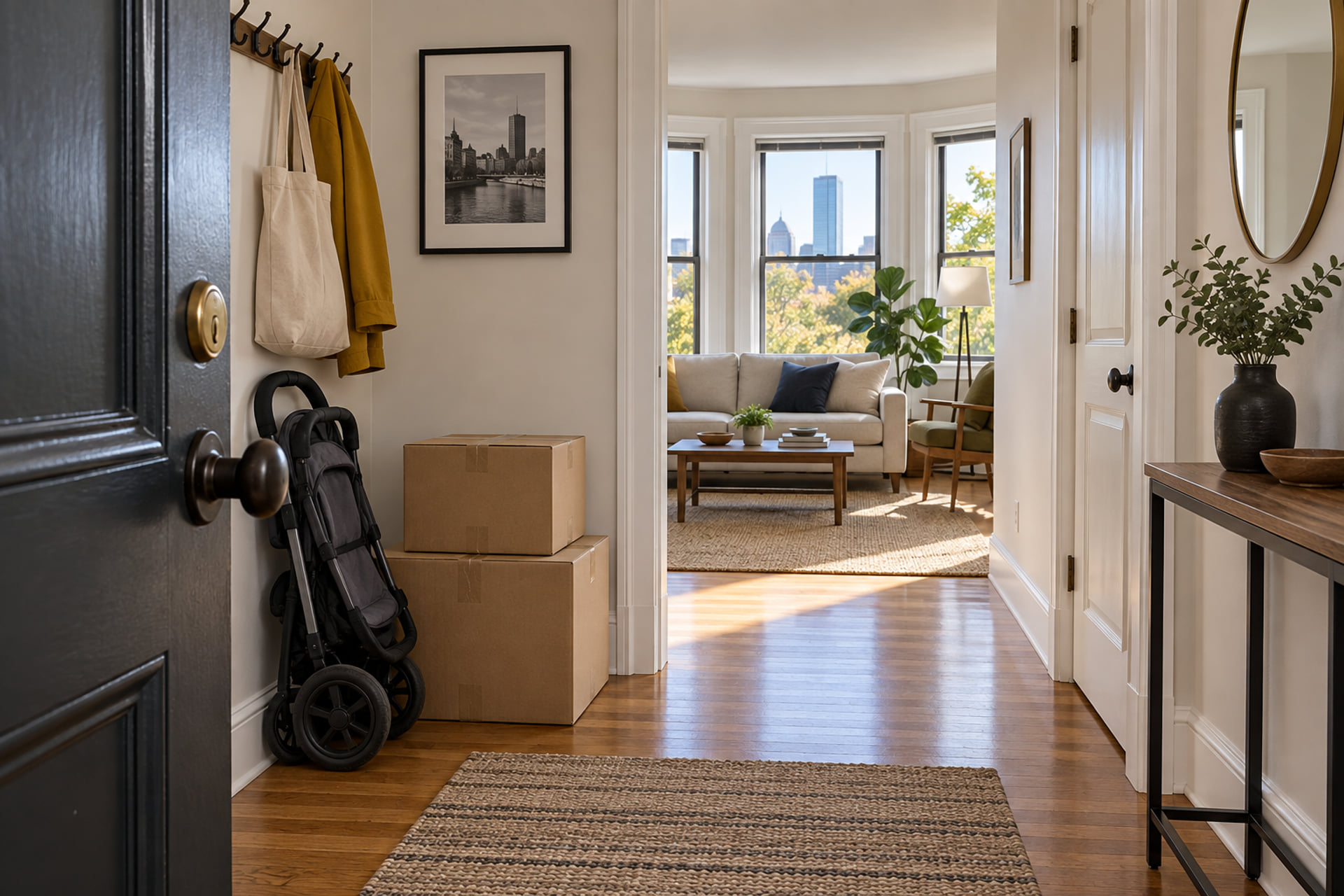
Record the floor, number of flights and tightest landing. Send photos of the stairs and doorways to the mover. Ask about protective arrangements for common areas and where the truck may load.
Get the move-in instructions from management: receiving hours, service entrance, elevator reservation, insurance paperwork and any deposits or fees. A passenger elevator may not be the approved moving route.
Check whether the truck can approach and turn, and how far items travel from vehicle to room. Include basement, attic and garage belongings in the inventory.
For a household with children, confirm enrollment and assignment requirements directly with the relevant school system. Do not assume that the nearest school serves a property or that a broad neighborhood recommendation answers your child’s needs.
For accessibility, inspect the full route from the pavement to the rooms you will use. A listing that mentions an elevator may still involve entry steps or a narrow lift. Ask for measurements and visit in person where possible.
Pet rules, bicycle storage, laundry and visitor arrangements can also change the fit of a home. Get the building’s written rules before organizing the move, especially when your current furniture or routine depends on a feature that the new home may not have.
Milvus publishes a Discount-category rate of $110 per hour for two movers and a truck. Other crew sizes and date categories have different rates. Confirm the category for your date, minimum billable time, travel and any additional services in your written estimate.
An apartment’s bedroom count is a rough description, not a complete inventory. Include large furniture, box estimates, packing help, stairs, elevators and the carry from the truck. If the lease starts after you must leave the old home, discuss storage and redelivery as part of the plan.
Keep a short note for each home: total cost, commute, furniture fit, building rules and anything still unanswered.
Make sure you will have keys and permission to receive the delivery. Align the building reservation with the moving appointment.
Share both addresses, the date and inventory, plus photos of difficult access. Include the services you want priced.
Follow Boston’s current moving guidance and the building’s instructions. Confirm who is responsible for each arrangement before pickup.
Have a different situation? Call 857-895-8955 and talk it through with Milvus.
There is no single answer for every household. Compare the actual home, school arrangements, childcare journey, parks and support network you need. Verify school eligibility directly rather than relying on a neighborhood ranking.
Cambridge is a separate city across the Charles River. It can be a useful addition to a Greater Boston housing search, but compare its addresses, services and travel routes separately.
You can discuss likely dates and a preliminary inventory early. An accurate final plan needs the destination address, access details and receiving arrangements. Tell Milvus when any of those change.
Your estimate depends on the items, access and services you need.
Prefer to talk? 857-895-8955Share the addresses, date and the items you want to move. Milvus can help you work out packing, transport and delivery.